
If you walk down a street or ride the subway in Korea, you’ll probably see people wearing masks. But they may not be coughing or showing any obvious signs of being sick.
It’s easy to assume this is simply a habit left over from COVID, but people in Korea wore masks for other reasons even before the pandemic. Fine dust, dusty environments, concerns about catching a cold, going out without makeup, and simply wanting to cover part of the face can all be reasons.
So if you see someone wearing a mask in Korea, it doesn’t necessarily mean they’re sick.
Fine Dust and Dusty Places
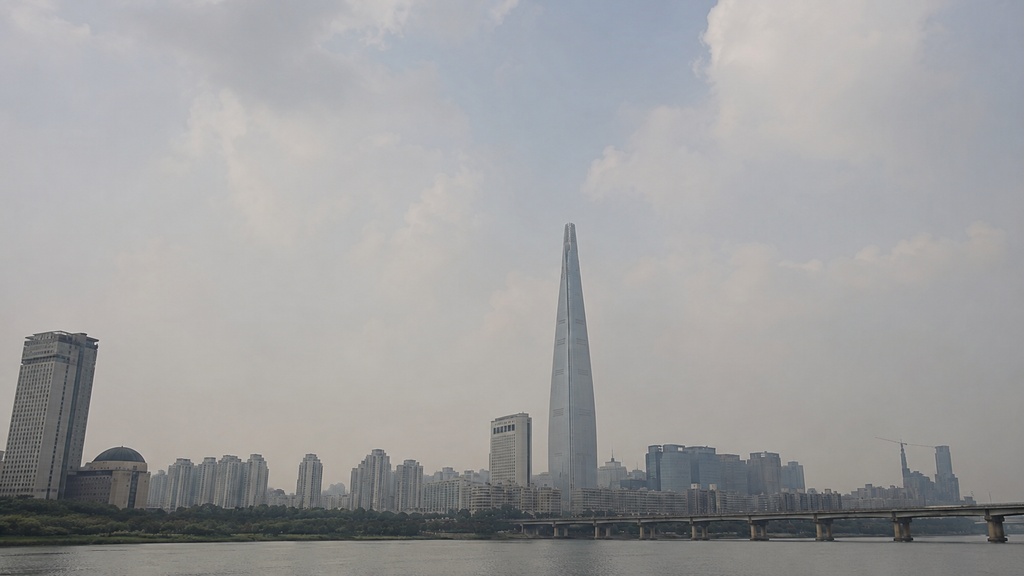
One common reason people wear masks in Korea is fine dust or yellow dust.
I used to associate bad fine dust more with spring, but these days there are times throughout the year when the air feels dusty to me. And it isn’t always just outdoors. Some indoor spaces can feel quite dusty too.
I have rhinitis, so I’m particularly uncomfortable in dusty environments. There are also times when certain subway or indoor spaces feel a little stuffy to me, so I often wear a mask in everyday life.
I don’t normally wear the thick KF94 masks that many of us became familiar with during COVID. For daily use, I usually prefer a lighter disposable nonwoven mask.
There is an important distinction, though. Wearing a lightweight disposable mask because it feels comfortable is not the same as choosing a mask specifically for fine-dust protection. If fine dust is your main concern, it’s better to check the mask’s particle-filtering performance rather than assuming any lightweight mask will provide the same level of protection.
When I’m Concerned About Colds or Crowded Places
Seasonal changes in Korea can bring noticeable temperature differences between day and night. During these periods, it’s also common to notice more people coughing around you.
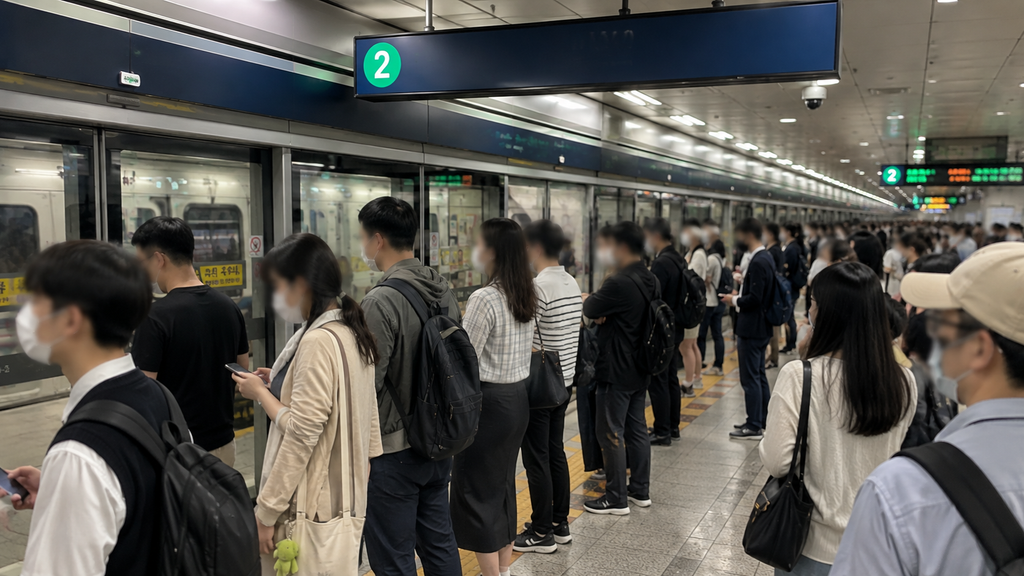
On a crowded subway or bus, you’re naturally sharing a relatively small space with a lot of people.
Personally, if I’m going to spend a lot of time in a busy public place, or if I need to visit a hospital or pharmacy, I usually wear a mask.
It doesn’t necessarily mean that I’m sick. Sometimes I’m simply wearing one because of the environment around me.
After COVID, seeing someone wearing a mask for reasons like these has become even less unusual. A mask in Korea isn’t automatically a signal that the person wearing it is ill.
On No-Makeup Days, a Mask Can Be Convenient
Not every reason for wearing a mask is related to health.
Sometimes it’s simply convenient when I’m not wearing makeup.
If I’m only going to the convenience store in my neighborhood or making a quick trip to the supermarket, doing a full face of makeup can feel unnecessary. A hat can feel uncomfortable too, so there are days when putting on a lightweight mask is just easier.
This is another reason you don’t necessarily need to assume someone wearing a mask in Korea is sick. Some people use one when they’re going out without makeup and simply want to cover part of their face.
For me, the opposite is true when I’m wearing full makeup. I don’t particularly like wearing a mask then because makeup can rub off onto the inside of it and my base makeup can get messed up.
So for me, a mask isn’t always something I wear to hide my face. It’s more like an everyday item that can be convenient depending on where I’m going and what I’m doing.
Masks Can Also Be Part of Someone’s Style
Masks can sometimes be used as part of an outfit or personal style.
Beyond basic white or black masks, people can choose different colors and shapes depending on what they find comfortable or what works with their clothes. Since a mask covers part of the face, it can also change the overall look of an outfit.
But that doesn’t mean everyone wearing one is making a fashion choice.
One person might be concerned about dust. Someone else might want extra protection during cold season, while another person might be having a no-makeup day. Some people may simply feel comfortable wearing one.
There isn’t one reason that applies to everyone.

A Mask Doesn’t Always Mean “I’m Sick” in Korea
If you’re visiting Korea for the first time, seeing people wearing masks on the subway or walking around the city might make you wonder whether a cold is going around.
Sometimes that is exactly why someone is wearing one. But it’s far from the only reason.
Dust, crowded public spaces, visits to hospitals or pharmacies, no-makeup days, fashion, and simple personal comfort can all play a part.
I’m one of the people who may carry a lightweight mask and put it on when I feel I need it, even when I’m not sick.
So rather than thinking of masks in Korea only as something sick people wear, it may be more useful to think of them as an everyday item that some people use whenever the situation calls for it.
Today’s Korean: 마스크 쓰다
마스크 쓰다
Romanization: maseukeu sseuda
Easy pronunciation: ma-seu-keu sseu-da
Natural meaning: to wear / put on a mask
In Korean, the verb commonly used with a mask is 쓰다 (sseuda).
For example:
마스크 쓸까?
Maseukeu sseulkka?
ma-seu-keu sseul-kka?
A natural meaning is:
“Should I/we put on a mask?”
You might say this before entering a crowded place or when you feel like wearing a mask would be more comfortable.
Another useful expression is:
마스크 쓰는 게 좋을 것 같아.
Maseukeu sseuneun ge joeul geot gata.
ma-seu-keu sseu-neun ge jo-eul geot ga-ta.
Natural meaning:
“I think it would be better to wear a mask.”