
Do You Need Cash in Korea? A Payment Guide for Travelers
If you’re planning a trip to Korea, you may be wondering how much cash you should exchange before you arrive.
The short answer is: you probably don’t need to carry much cash in Korea.
Cards are widely used for everyday payments, including at restaurants, cafés, convenience stores, shopping malls, and beauty stores. Even very small purchases are commonly paid for by card.
That doesn’t mean you should travel with absolutely no cash, though.
There are still a few situations where Korean won can make your trip much easier, especially when using a transportation card or shopping at certain traditional markets and small businesses.
So instead of asking, “Can I travel around Korea without cash?” I think the more useful question is:
How much cash should I keep as a backup while using cards for most of my trip?
Payment and transportation information in this article was checked in September 2026.
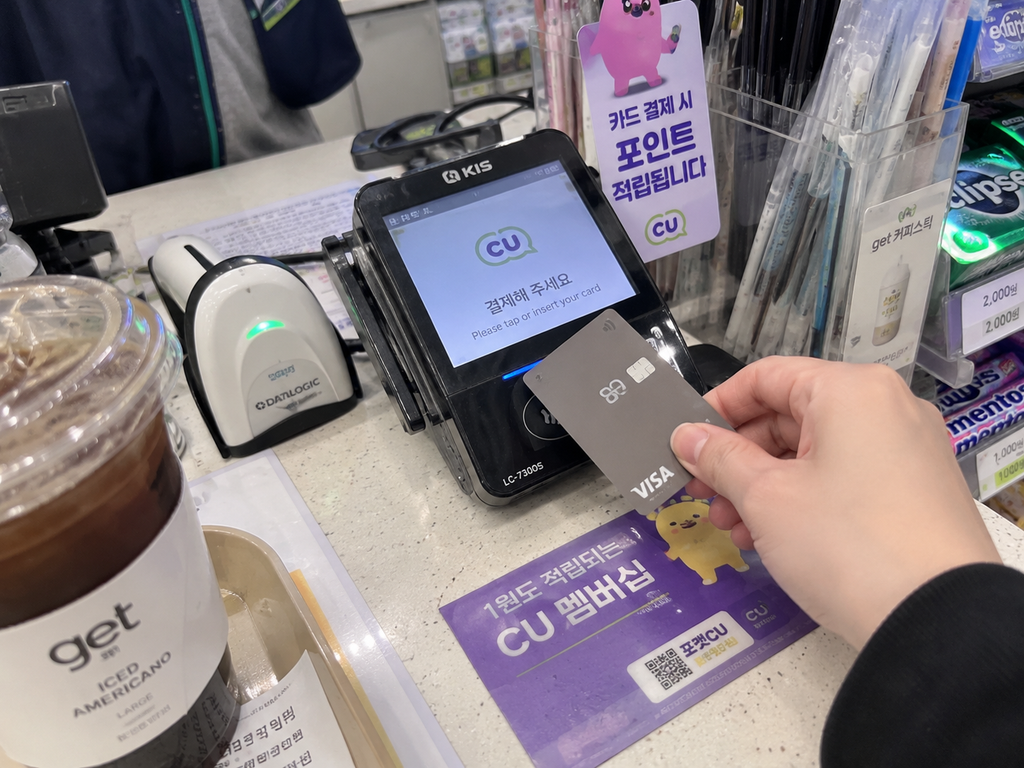
How Often Do People in Korea Actually Use Cash?
If I look at my own daily life, I rarely need cash.
Even among my family, there aren’t many people who regularly carry a wallet full of cash anymore.
My parents are more likely to carry cash in their wallets, but among people around my age, it’s much more common to use credit cards, debit cards, or mobile payments.
I’m the same.
If I have cash with me, it’s usually just 10,000 or 50,000 won kept somewhere as emergency money rather than something I expect to use throughout the day.
Paying by card for a very small purchase isn’t unusual in Korea either.
If I walk into a convenience store and buy only one inexpensive item, I don’t think twice about paying by card.
At cafés and restaurants, card payments are so normal that I can sometimes go for quite a long time without taking cash out at all.
There are even kiosks and unmanned payment systems designed mainly around card payments, which means that in some situations, using cash can actually be less convenient than using a card.
Credit Cards and Mobile Payments Are Part of Everyday Life
When you’re out in Korea, you’ll see people paying with physical cards as well as their smartphones.
Mobile payment services are a normal part of daily life here. For example, people with Korean-issued cards commonly register them with services such as Samsung Wallet and simply use their phones to pay.
So from a local perspective, not carrying much cash isn’t particularly unusual.
However, there is an important distinction for travelers.
The fact that mobile payments are common in Korea does not mean every overseas mobile wallet or foreign-issued card will work everywhere.
Visa and Mastercard issued overseas are accepted at many businesses, but acceptance can still depend on the merchant and payment terminal.
For that reason, I wouldn’t recommend traveling with only one foreign-issued card.
If possible, bring two cards, preferably using different payment networks, plus a small amount of Korean won as backup.
That gives you another option if one card unexpectedly doesn’t work.
One Important Reason You May Still Need Cash: T-money
For travelers, one of the most practical reasons to keep Korean won is public transportation.
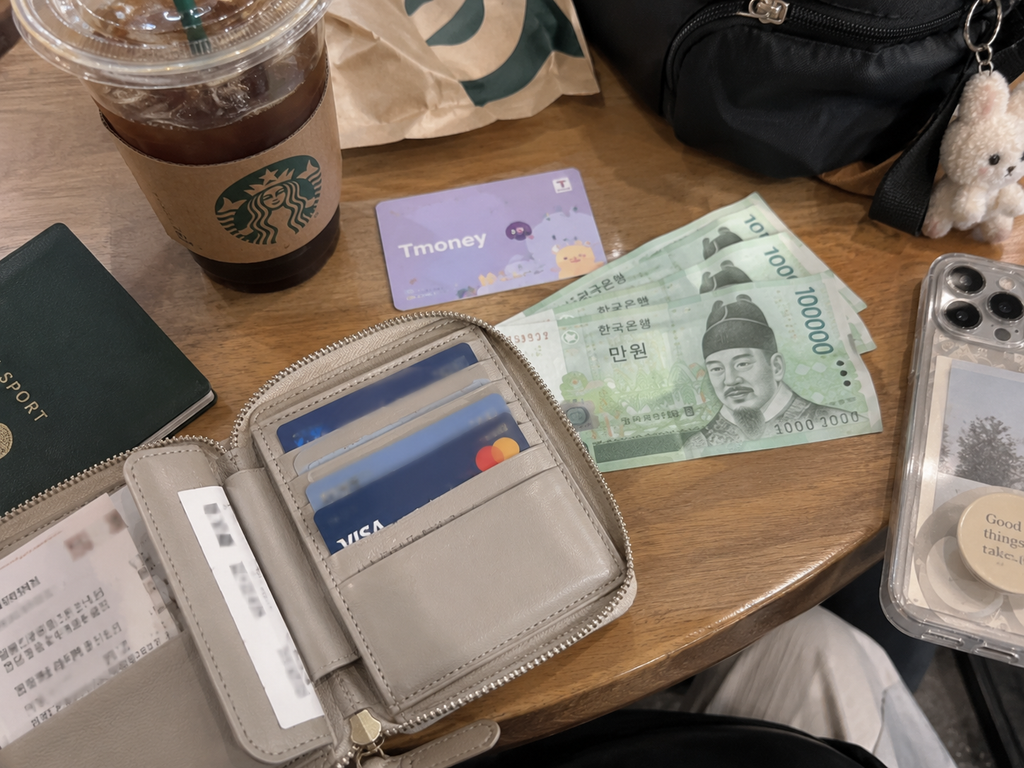
If you plan to use buses and subways regularly, you’ll probably come across T-money, one of Korea’s most commonly used prepaid transportation cards.
And this is where cash becomes important.
As of September 2026, a standard prepaid T-money card cannot generally be purchased or recharged with a foreign-issued credit card. Cash in Korean won remains the straightforward option for topping up a regular T-money card.
So even if you expect to pay for almost everything else by card, having some cash ready for transportation can save you a lot of trouble.
You also don’t need to load a huge amount onto your transportation card immediately.
You can start with a smaller amount and recharge it as you travel.
Korea’s transportation payment system is gradually changing, and there are now some ticket machines and services where foreign-issued cards can be used for certain tickets.
But if you’re planning to use a regular T-money card throughout your trip, having some Korean won is still the simplest option.
Cash Can Be Useful at Traditional Markets and Small Shops
Most businesses in Korea accept cards, but that doesn’t mean every single place works the same way.
At traditional markets, small street stalls, older shops, or other very small businesses, having cash can sometimes make things easier.
This is especially worth remembering if trying street food and visiting traditional markets are high on your Korea itinerary.
But I wouldn’t assume that traditional markets in Korea are cash-only.
Many vendors accept cards now, and payment options vary from one shop to another.
So the most realistic approach is to use your card as your main payment method and keep cash as a backup for places where card payment isn’t convenient or available.

What If Your Foreign Card Suddenly Doesn’t Work?
There’s another simple reason I recommend carrying a little cash:
Sometimes a card just doesn’t work.
A foreign-issued card that worked perfectly at one store might fail at another terminal. There may also be temporary network problems or a security restriction from your card issuer.
Often, having a second card solves the problem immediately.
But if neither card works, a small amount of Korean cash can suddenly become very useful.
That’s why I wouldn’t recommend traveling around Korea with one card and absolutely no cash just because Korea is highly card-friendly.
Cash doesn’t need to be your main payment method.
Think of it as a backup.
How Much Cash Should You Bring to Korea?
You probably don’t need to exchange your entire travel budget into Korean won.
I think a much more practical approach is to carry enough for your first transportation-card top-up and a few situations where your card may not work.
For many travelers, around 50,000 to 100,000 won per person can be a reasonable starting amount for backup cash.
This isn’t a minimum requirement or an official rule.
It’s simply a practical range that gives you some Korean won for T-money, small shops, street food, or an unexpected payment problem.
How much you actually need depends on how you travel.
If you plan to spend a lot of time exploring traditional markets and street-food stalls, you may use more cash.
If most of your trip involves department stores, shopping malls, cafés, restaurants, convenience stores, and other mainstream businesses, you may return home having used very little of it.
It can also be useful to keep some 10,000-won notes rather than carrying only 50,000-won notes, especially when paying a small amount at a small shop.
The Payment Setup I’d Recommend for a Korea Trip
If a friend were visiting Korea and asked me what to bring, I’d keep it simple:
Two international cards + T-money + a small amount of Korean won.
Use your regular card at restaurants, cafés, convenience stores, shopping malls, and most other businesses.
Use T-money for buses and subways.
Keep your Korean won for T-money recharges, small businesses where your card doesn’t work, and emergencies.
There are also prepaid payment cards designed for international travelers, including services that combine payment and transportation features.
These can be convenient depending on your travel style, but you don’t necessarily need one just to visit Korea.
If you already have an internationally enabled credit or debit card, your regular cards + T-money + backup cash can be a much simpler setup.
Should You Exchange a Lot of Cash Before Your Korea Trip?
For most travelers, probably not.
Using a card for small purchases is completely normal in Korea, and many locals don’t carry much cash in their daily lives either.
But travelers are in a slightly different situation.
You’re using cards issued outside Korea, and there are still situations—such as recharging a regular T-money card—where Korean won is useful.
So I wouldn’t describe Korea as a place where you should bring no cash at all.
A better way to think about it is:
You don’t need to carry a lot of cash in Korea.
Use cards as your main payment method and keep a small amount of Korean won as backup.
For most trips, that’s the easiest balance.
Today’s Korean
카드 돼요?
Romanization: Kadeu dwaeyo?
Easy pronunciation: Ka-deu dwae-yo?
Meaning: “Can I pay by card?” / “Do you take cards?”
This is a very simple and natural expression you can use at a small shop, market stall, or anywhere you’re not sure whether cards are accepted.
You can also say:
카드 결제 돼요?
Romanization: Kadeu gyeolje dwaeyo?
Easy pronunciation: Ka-deu gyeol-je dwae-yo?
Meaning: “Can I pay by card?”
And if you want to pay in cash:
현금으로 할게요.
Romanization: Hyeongeumeuro halgeyo.
Easy pronunciation: Hyeon-geu-meu-ro hal-ge-yo.
Meaning: “I’ll pay in cash.”
Of the three, 카드 돼요? (Kadeu dwaeyo?) is probably the easiest one to remember and use while shopping in Korea.